
Cutting through the AI fluff in fintech
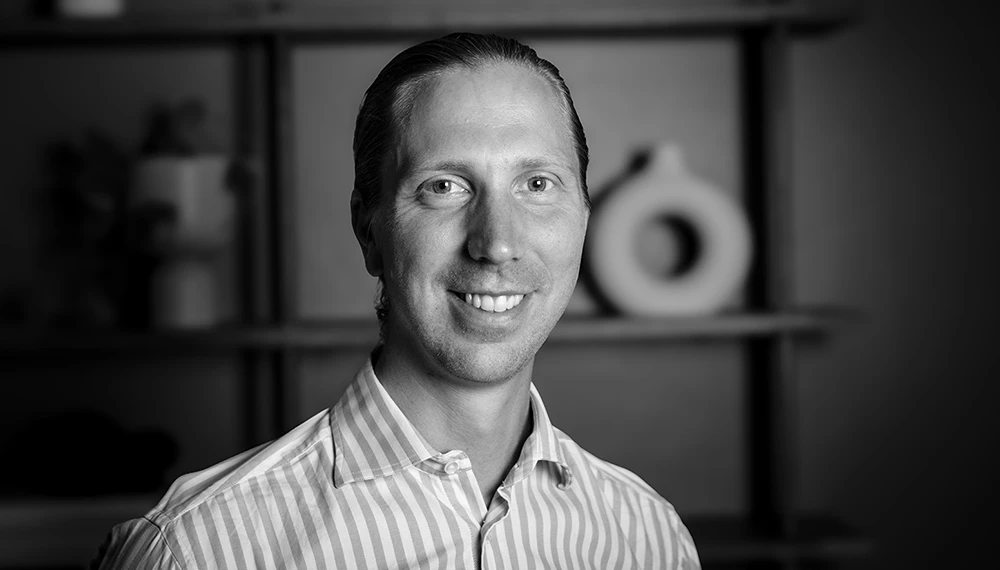
This is the fourth and last part of our series with Quiddly’s CTO Mattias. In the former three parts we have covered everything from philosophy and architectural patterns to the balance between innovation and risk.
In this final article we hone in on the obligatory topic of AI, but in a more grounded and less grand or hyped manner. Buckle up for a ride that takes us straight through the AI fluff and down to the practical core.
How AI fits into the workflow of a developer
We are curious about how Mattias sees AI fitting into a developer’s everyday workflow. Is it a co pilot, a replacement, or something else?
Both, neither, and more. I see AI as a tool, and like any powerful tool, its value depends on how you use it. As its capabilities grow, I integrate it more deeply into my workflow. As a copilot, it significantly increases both the speed and quality of my work, especially when it comes to research, exploration, and drafting. In some cases, it even completes tasks outright, which makes it feel like a replacement.
Mattias expands that he thinks of this as outsourcing. In business, we outsource non-critical work to focus on our unique value-add. He applies the same principle by pushing as much non-core work as possible to AI, so he can focus on judgment, architecture, and the decisions that truly matter. That’s why AI is neither a copilot nor a replacement. He is still firmly in the driver’s seat. If that ever changes, it’s a signal to evolve.
What fascinates Mattias most right now is not just what AI does, but how we interact with it. The human interface side of AI is evolving rapidly, and that is where some of the most interesting developments are happening.
Having once been deeply interested in neuropsychology, I find it magical that relatively simple concepts like transformers and attention mechanisms can produce results that feel almost intelligent. What these models can generate are nothing short of astonishing.
Mattias tends to steer clear of the grand philosophical debates around AI, unless the conversation drifts into sci-fi! What truly interests him is the tangible: real use cases, real limitations, and real costs.
In his role as CTO, the question isn’t whether AI will change the world. It’s whether a specific technology can measurably improve how the team works in terms of speed, quality, or risk. And by that standard, generative AI is already making an impact across the entire software development lifecycle. All the way from early ideation and prototyping to testing, refactoring, and documentation.
Where is AI making the most impact, for developers or inside the solutions they build?
We have talked about how AI currently fits into a developer’s everyday workflow, but where does Mattias see AI making the biggest difference? Is it in the development workflows or in the products we ship? Will this change over time?
Both. But in different ways. In development workflows, AI is already changing how we build software: automating routine tasks, accelerating research, and improving documentation and testing. It’s exceptional for offloading certain types of tasks.
That said, Mattias expands that the real long term impact will be in the products themselves. AI is rapidly becoming a core part of the user experience, shaping smarter, more adaptive and more personalized solutions. Over time, he thinks we will see a shift from using AI as a productivity booster behind the scenes to embedding it deeply into what we deliver to customers.
In other words, today AI helps us build better products. Tomorrow, AI will be part of the product.
Beyond technology
Many CTOs are deeply technical, but not all succeed in connecting technology with real business needs. We ask Mattias how he makes sure that he and his teams stay aligned with the market and customer demands.
I think connecting technology to real business needs is a skill like any other. It’s something you develop over time through experience. At this point, it’s almost subconscious for me, though I sometimes find it challenging to articulate that perspective to those who haven’t lived it yet.
Mattias says that the hardest moments are when teams get excited about technically elegant solutions that, while impressive, do not deliver much real world value. That is when he tries to step back and ask a simple question: Who benefits from this? If the answer is not clear and if it is not adding value to customers or driving revenue, then it may be worth rethinking.
Of course, internal improvements matter too. Enhancing developer experience or operational efficiency can reduce costs and increase reliability. But ultimately, sustainable success depends on creating value for customers.
At Quiddly, that mindset is built into how we grow. Our product expansions evolve directly from our customers’ real time needs. As we scale, maintaining that close connection between technology, business goals and customer value will be critical to our continued success.
The future Quiddly legacy
In 30 years, when future tech historians look at Quiddly, what will they say about the solutions and how they have evolved and contributed? What does Mattias think they will say about his legacy? What unique views and value did he bring to the table and what difference did he make?
Mattias gets a subtle smile on his face and explains that in just six years, Quiddly has built powerful solutions for factoring and debt collection, and has learned a tremendous amount along the way. Thirty years from now, he believes Quiddly will still be driving that same mission: streamlining financial flows, pushing automation forward and using data intelligently to assess risk and combat fraud. The result will be faster, fairer and more transparent services.
The real challenge and opportunity will be to keep the spark of innovation alive while growing within a highly regulated industry. If Quiddly can do that, the impact will continue to scale far beyond its early years.
As for my own legacy. I don’t expect anyone to remember my name, nor do I need them to. What matters to me is that some of the principles and patterns I helped shape early on continue to live in the organization. Every time I hear my own reasoning or values echoed back by others, I see that culture taking root. That’s what I’ll remember in 30 years. Not the code or the systems, but the fact that I helped define the Quiddly way.
Curious yet?
If you are not curious about Quiddly and our solutions yet, well, then we are probably not for you. However, as we suspect you might be interested after reading this article series with Mattias, may we suggest that you visit our solutions page and delve deep into the module or modules of your choice to learn more.